Saratoga
Saratoga National Historical Park — I never planned to set foot in New York on this trip. But after weeks of walking through where the Revolution began, in Lexington and Boston, I kept learning that everything I'd seen pointed here — to the place where it truly turned. Once I understood that, skipping it felt impossible. So I took the detour, and stood on the actual ground where the 1777 American victory convinced France to formally join the war — arguably the turning point of the whole conflict. See the Battle of Saratoga.
The Whole War on One Wall
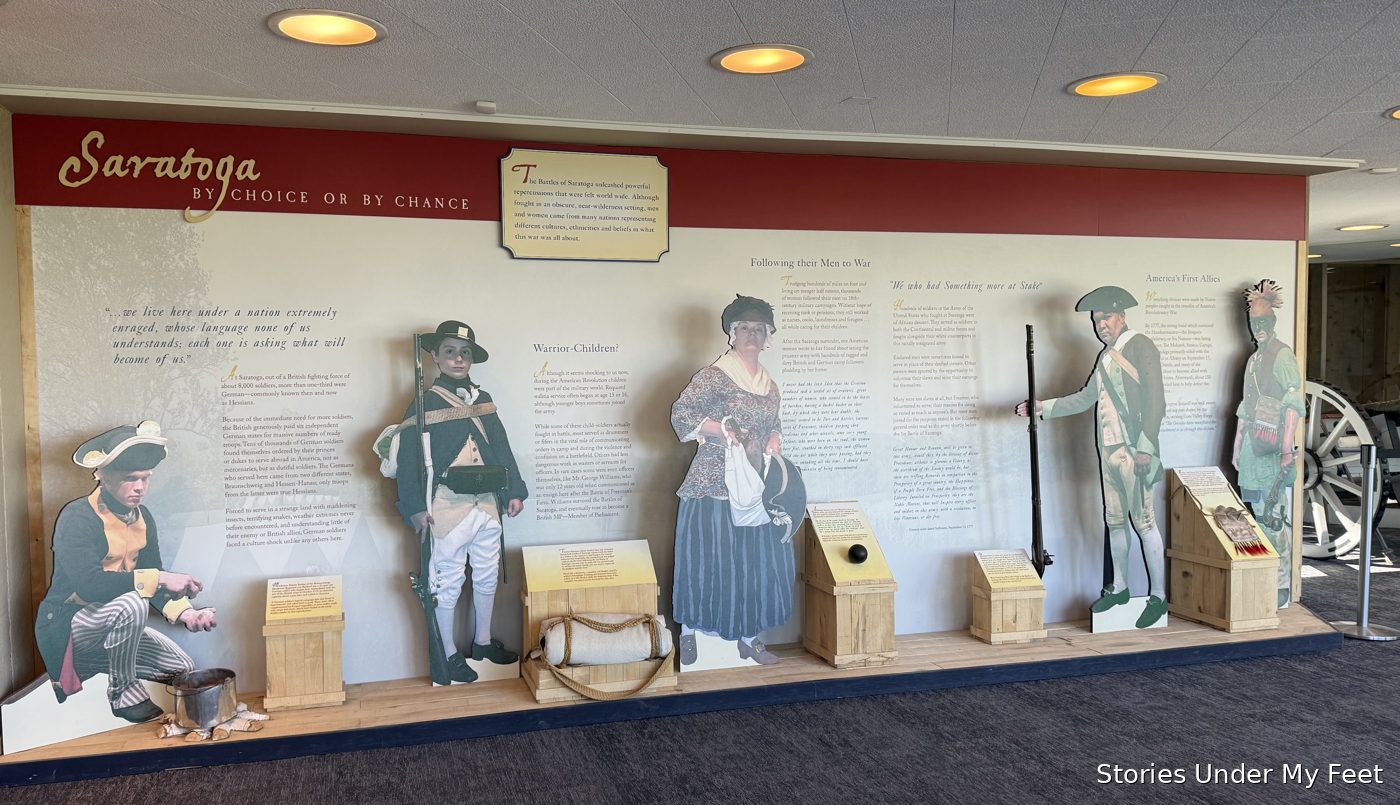
The visitor center surprised me. The lobby exhibit, Saratoga: By Choice or By Chance, greets you with life-size figures of the people who actually ended up here — a warrior-child in uniform, women who followed their men to war, German soldiers fighting for a country that wasn't theirs. That last one took me straight back to the exhibition in Maine that first taught me to look at the Revolution through different eyes — every telling changes with whose side of the story you're standing on. Then a timeline room walks the entire Revolution year by year under little numbered flags, 1775 to 1783, from a "crisp April morning" on Lexington Common all the way to peace. I learned that 1777 was called the Year of the Hangman — the three sevens standing in a row like a gallows, a year of destiny for those who believed the American cause would end at the end of a rope.
Over the relief model of the battlefield, a line from historian Richard Ketchum sums up why this quiet place matters: "At Saratoga, the British campaign that was intended to crush America's rebellion ended instead in a surrender that changed the history of the world."
My favorite detail was the French thread running through everything — panels on the secret aid smuggled to the Americans before the alliance (playwright Beaumarchais and his cover company shipping cannons across the Atlantic), and then, months after the news of Burgoyne's surrender reached Paris, Benjamin Franklin received by Louis XVI at Versailles. There's even a pair of trophy cannons — actual British guns captured here in 1777, nearly 250 years old, resting in wooden cases you could lean right over.
The Ground Itself
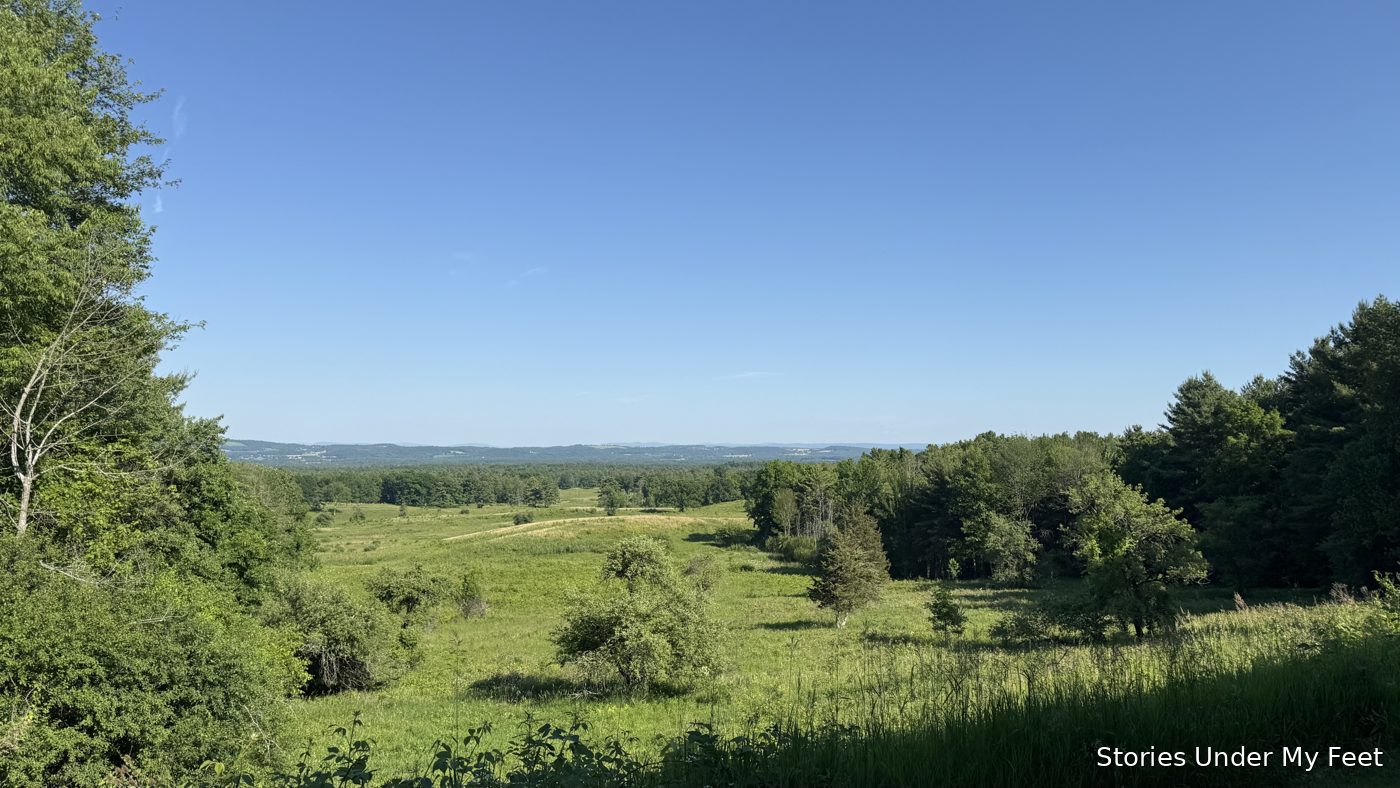
Outside, the battlefield is simply beautiful — open meadows and treelines rolling away toward the Hudson, with hills fading blue in the distance. It's hard to hold both things in your head at once: the loveliest picnic country you've ever seen, and the place where two armies dug in, clashed twice in three weeks, and decided the fate of a continent. No crowds, no noise. Just wind in the grass.
North to Victory
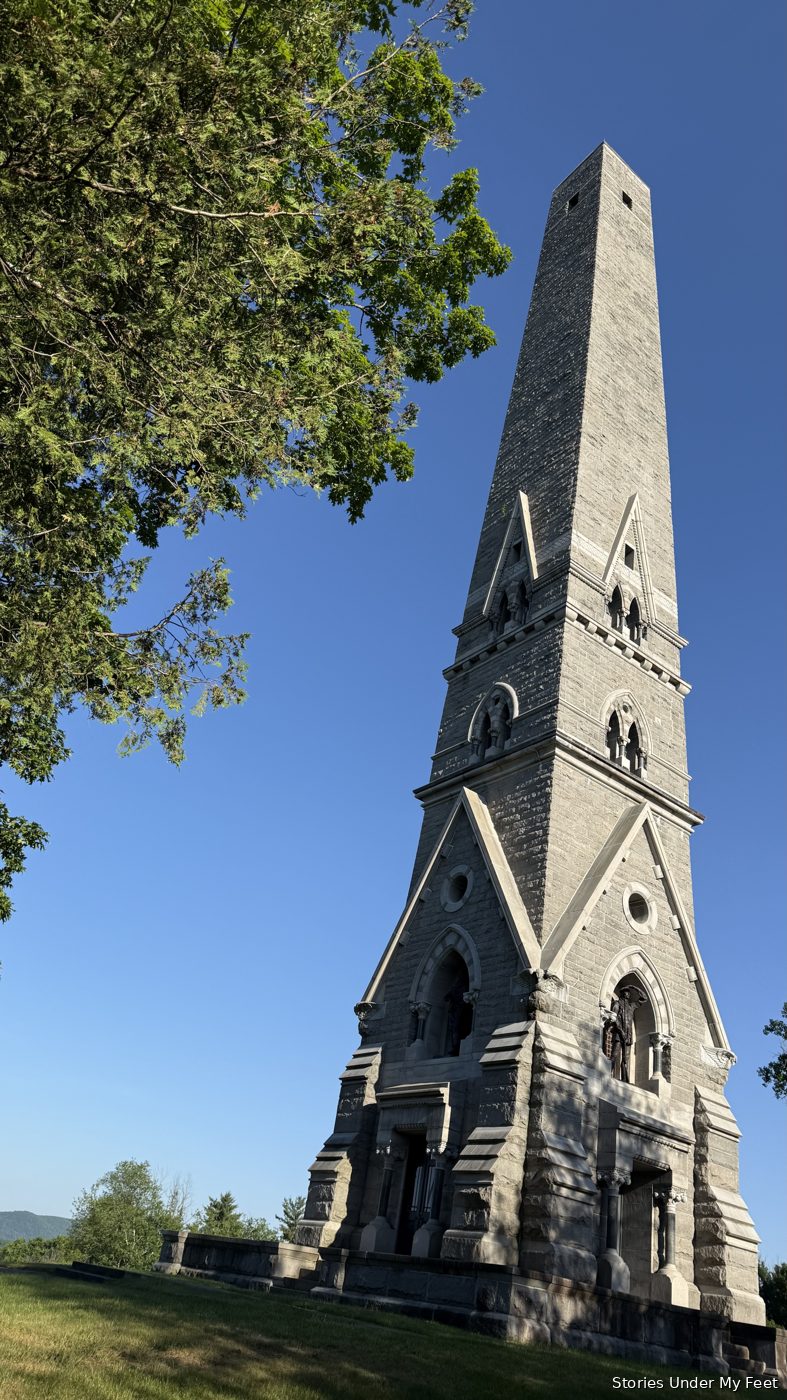
A flyer at the desk pointed me eight miles north to the park's Northern Sites, in Schuylerville and a village literally named Victory. That's where the Saratoga Monument stands — a 155-foot stone obelisk begun on the hundredth anniversary of the surrender, "1777 · Saratoga · 1877" carved in gold over the door. I got there in the last golden hour of the evening, when the shadows stretch long across the cemetery that surrounds the hill — one weathered headstone of a Revolutionary War major still gets a fresh American flag planted at its base.
Just down the road, a sign marks Victory Woods, where 6,000 surrounded, battered British soldiers made their final camp before Burgoyne surrendered on October 17, 1777. Standing in the quiet trees, it reads: an army of amateurs had defeated a world power.
An unplanned afternoon, and one of the best of the trip. Then I turned the car around and found my way back to the route I'd actually planned.